

Committee hears pitch for proposed 10,000-bpd project in Fort Nelson, B.C.
A B.C. company is seeking federal support to build a business case for microrefineries that would convert natural gas into diesel and home heating fuels for communities across northern Canada. A 10,000-barrel-per-day project in Fort Nelson was recently pitched at a parliamentary committee studying affordability challenges in the north.
Ken Watson, president of Integrated Resource Technologies, told the committee that a refinery could cut diesel prices by eight to 12 cents per litre, or as much as 61 cents if wood waste was also used in production.

"Over a 10-year process, it could be up to $3.5 billion in savings on fuel," Watson told MPs. "Fort Nelson has ample natural gas, and it hasn't been harvested for 30 years."
Watson has asked the committee to recommend federal support for a feasibility study to explore the economic viability of the project and validate its potential savings.
Watson said Fort Nelson would be the first in a possible series of microrefineries in Canada's north, where locally-produced diesel could also be sent to the Yukon and Northwest Territories.
"Being that we're already 12 hours closer to the area than we are from the refineries, we believe the savings in transport and the costs of producing it locally will drive down the cost substantially," he said during an Oct. 20 hearing.
As of Nov. 18, diesel was selling for 284.5 cents per litre in Fort Nelson, according to price-tracking website Gasbuddy.com. In Yukon, prices were as high as 275.9, and as much as 266.7 cents in the Northwest Territories.
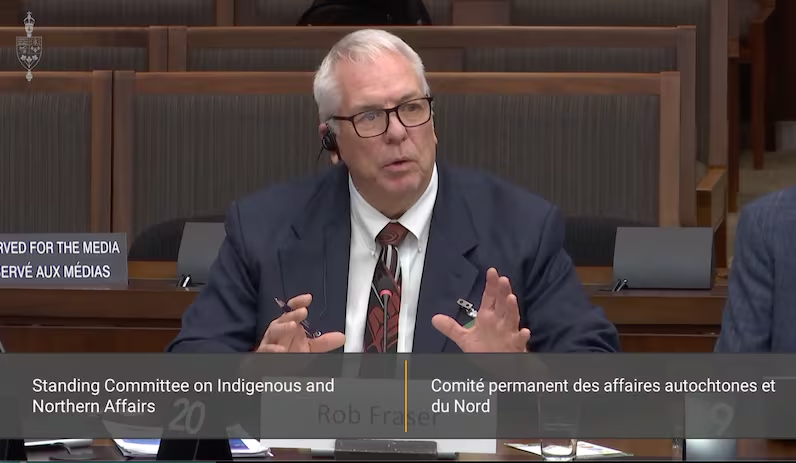
Rob Fraser, mayor of the Northern Rockies Regional Municipality, said the proposal is an intriguing idea that could help revive Fort Nelson's economy.
"It really will give us fuel autonomy in the north," Fraser said. "The price of fuel permeates everything we do."
According to Fraser, the region is sitting on a 100-year supply of natural gas reserves.
But production has halted in recent years amid low prices, high costs, wildfires, and the closure of Fort Nelson’s gas processing plant in 2024.
Fraser said Fort Nelson now relies on natural gas piped in from other parts of northeast B.C.
"It’s frustrating," he said in an interview. "We’d like to see all of those gas fields producing."
Fraser told MPs that fuel prices are so high they can prevent people from seeking medical care.
"Sometimes the price of fuel just makes it unaffordable for people to get to a specialist or to a CT scanner, and they just don't do it. Their health outcomes are worse because of it," he said.
"A refinery like this will assist in every aspect of the lives of northerners and their communities."
The refinery is a novel concept for the north but the technology isn’t entirely new to Canada.
In 2024, a refinery using natural gas to produce synthetic diesel began production in Carseland, Alta., which was reported to be the first commercial small-scale gas-to-liquids plant in the country.
Adam Pankratz, a lecturer at the University of B.C.’s Sauder School of Business, said he hasn't reviewed the specifics of the Fort Nelson proposal.
But he said refineries are expensive to build, and that serving small communities spread across large geographical distances could make it hard to turn a profit.
"There are other sources of energy which perhaps could be part of the solution in certain northern remote communities," said Pankratz.
"But again, that all comes down to the cost of those investments and the potential customer base that it can serve."
Still, Fraser said Ottawa’s possible support for a feasibility study could help attract investors and reduce the project’s financial risks.
"The First Nations won't invest in it, the banks won't invest in it, private investors won't invest in it until they know they have something that's feasible and would actually work," Fraser said.
"We're really early in those stages … trying to convince people that this is a viable project of national importance."
-Matt Prepost CBC.ca
Add comment
Comments